
Staying comfortable and confident in your daily routine matters more as your body changes with age, especially after you reach 60.
At RL Communities, we focus on small, practical ways to support our residents’ easier movement throughout the day, which is why we offer the Ageless Grace® program. This music-based exercise initiative, grounded in the neuroplasticity body of knowledge, is a fantastic way to integrate tiny habits into your movement to achieve the best results.
Try them alongside the 10 small movements we’ve listed here, and you’ll soon enjoy big benefits for your body and mind.
1. Ankle Rolls
With age, the fluid in your joints decreases and your cartilage thins. This leads to stiffness after prolonged inactivity.
Ankle rolls are an easy way to combat this stiffening, and you can do them while seated or while standing with a counter or chair nearby for extra support.
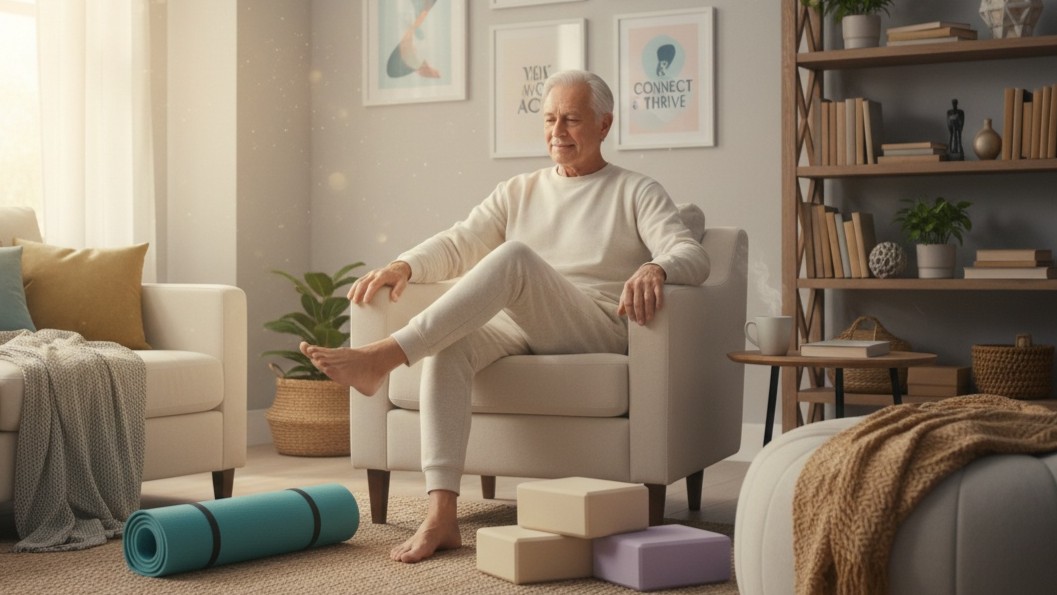
Lift one foot just off the floor and gently circle your ankle at a comfortable pace. After you’ve done a few turns, change direction, then switch to the other foot.
Ankle rolls help with circulation while keeping your foot joint flexible. That mobility supports steadier walking and makes it easier to adjust your footing as you turn or change direction.
2. Counter-Supported Squats
After the age of 50, muscle mass naturally declines, but counter-supported squats can go a long way toward building strength in your legs, reducing your risk of falling.
This movement also mirrors the everyday action of sitting down and standing up, and will help you get better at it! It also supports leg strength for climbing stairs and maintaining good general balance.
Stand facing a counter and let your hands rest lightly on it so you feel steady. Set your feet at a comfortable distance apart, then bend your knees and hips a little, and press through your feet to bring yourself back to standing.
Move slowly and take a short pause after each repetition, starting with a number that feels manageable and adding more as the movement becomes easier and more familiar.
3. Heel-to-Toe Walking
Loss of proprioception is one of the unalterable facts of aging, making navigating uneven surfaces more difficult.
Heel-to-toe walking helps you to build balance and awareness as you move, using a walking pattern that feels familiar and practical.
At a relaxed pace, place the heel of one foot directly in front of the toes of the other, keeping your head upright and your posture easy. If your balance feels uncertain, a nearby wall or railing can provide reassurance while you practice.
Because this movement closely reflects how you walk in everyday life, it supports steadiness and coordination in a very practical way, making it helpful to start with a short distance and build gradually.
4. Light Dumbbell Rows
The strength of your upper back supports good posture and helps with everyday lifting and carrying. Light dumbbell rows are an excellent way to combat age-related decline in bone density, muscle mass, and posture.
Hold a light weight in each hand, or no weight at all if that feels better. Bend slightly at the hips and let your arms hang naturally. Draw your elbows back toward your sides, then lower your arms with control.
The movement should feel steady rather than strained. If you feel sharp pain, pinching, or ongoing discomfort, particularly in the shoulders, neck, or lower back, stop the exercise and consider seeing a licensed physiotherapist to assess your form or address any underlying issues before continuing.
5. Marching in Place While Holding a Counter
Sarcopenia refers to the loss of muscle mass as you age, particularly in your core, hips, and legs. These are all essentials for walking comfortably as you go about your everyday tasks.
Marching in place can combat the effects of sarcopenia, and you can do it indoors or out.
Stand tall while holding onto a counter or other sturdy surface. Lift one knee to a comfortable height, lower it, then switch sides. Keep the pace slow and controlled.
6. Seated Knee Extensions
Weakness in your lower extremities is one of the biggest reasons falls occur, and strengthening the knees improves both your balance and stability.
Sit upright in a chair with both feet on the floor. Slowly straighten one leg until it reaches a comfortable point, then lower it back down before switching sides.
7. Sit-to-Stands From a Sturdy Chair
Older adults are more likely to contract osteoporosis, which leads to low bone mass and structural deterioration. It makes bones brittle and porous, making you more susceptible to fractures from even minor falls or small bumps.
Sit-to-stands focus on improving bone density and increasing lower-body strength, reducing your risk of these injuries.
Sit near the edge of a sturdy chair with your feet firmly planted on the ground. Lean forward slightly and press through your legs to stand, then lower yourself back down with control.
Using your hands for support is fine.
8. Standing Up During Phone Calls
Standing during phone calls is a way to add movement to your day without changing your routine much.
When the phone rings, stand up and remain standing for the duration of the call. Shift your weight naturally as you talk and keep your posture relaxed.
9. Walking Briefly Each Hour
Short walks spread through the day help prevent long periods of stillness. Once an hour, stand up and walk around for a minute or two. Keep your pace easy and unhurried.
These brief walks support joint comfort and general mobility. You don’t need to go far, just focus on taking steady steps and return to your seat when it feels right.
10. Wall Push-Ups
Wall push-ups build arm and shoulder strength in a supported way.
Stand facing a wall and place your hands against it at chest height. Bend your elbows to move closer to the wall, then press yourself back to standing. Keep the movement slow and controlled. Standing closer to the wall reduces effort, while stepping back increases it slightly.
Wall push-ups help build strength in your arms and shoulders, making everyday actions like pushing doors, steadying yourself, and rising from a chair feel more controlled.
Start Where You Are and Go From There
These movements support daily life, and some days you may try several. Other days, one or two may feel like enough. Over time, your small, consistent actions can help everyday activities feel easier, supporting your independence, comfort, and confidence in ways that fit naturally into your lifestyle.