Why Brain Games Matter for Older Adults
Brain games for seniors are mentally stimulating activities that help keep your mind sharp and active as you age. Here's what you need to know:
Popular Brain Games for Seniors:
- Crossword puzzles - Improve vocabulary and memory recall
- Sudoku - Strengthen logic and number skills
- Card games (Bridge, Solitaire) - Improve strategic thinking
- Word searches - Boost visual recognition and focus
- Digital brain training apps - Offer memory and pattern recognition exercises
- Board games (Chess, Scrabble) - Develop critical thinking and social skills
Most people know that physical exercise keeps your body healthy. But your brain also needs regular workouts to stay strong.
The good news? Research shows that engaging your mind with games and puzzles can make a real difference. A Mayo Clinic study found that older adults who participated in mentally stimulating activities were 14% to 42% less likely to develop memory loss symptoms compared to those who didn't.
Your brain remains capable of growth and change throughout your life - a process called neuroplasticity. When you challenge yourself with puzzles, card games, or other mental exercises, you're actively building new neural connections and maintaining cognitive function.
The best part is that brain games don't feel like work. Whether you prefer a quiet crossword puzzle with your morning coffee or a lively game of Bridge with friends, these activities combine fun with real cognitive benefits.
Why Brain Games are a Smart Move for Seniors
As we age, it's natural to wonder how we can keep our minds as sharp as possible. The answer, in part, lies in challenging our brains regularly. Brain games for seniors aren't just a fun pastime; they are a proactive strategy for maintaining and even improving our cognitive abilities.
So, what exactly are these "brain games," and why are they so beneficial? Essentially, brain games are any activities that require us to use our cognitive skills in a focused and engaging way. This includes everything from classic puzzles to modern digital apps. Their benefits for seniors are extensive, touching on several key areas of brain health.
One of the most important concepts here is cognitive reserve. Think of cognitive reserve as your brain's ability to cope with challenges. The more you stimulate your brain throughout your life, the stronger this reserve becomes, potentially delaying the onset of cognitive decline. Our brains possess an incredible quality called brain plasticity, meaning they can reorganize themselves by forming new neural connections. Engaging in mentally stimulating activities, like playing brain games, encourages this plasticity, helping us adapt and learn new things even in our later years.
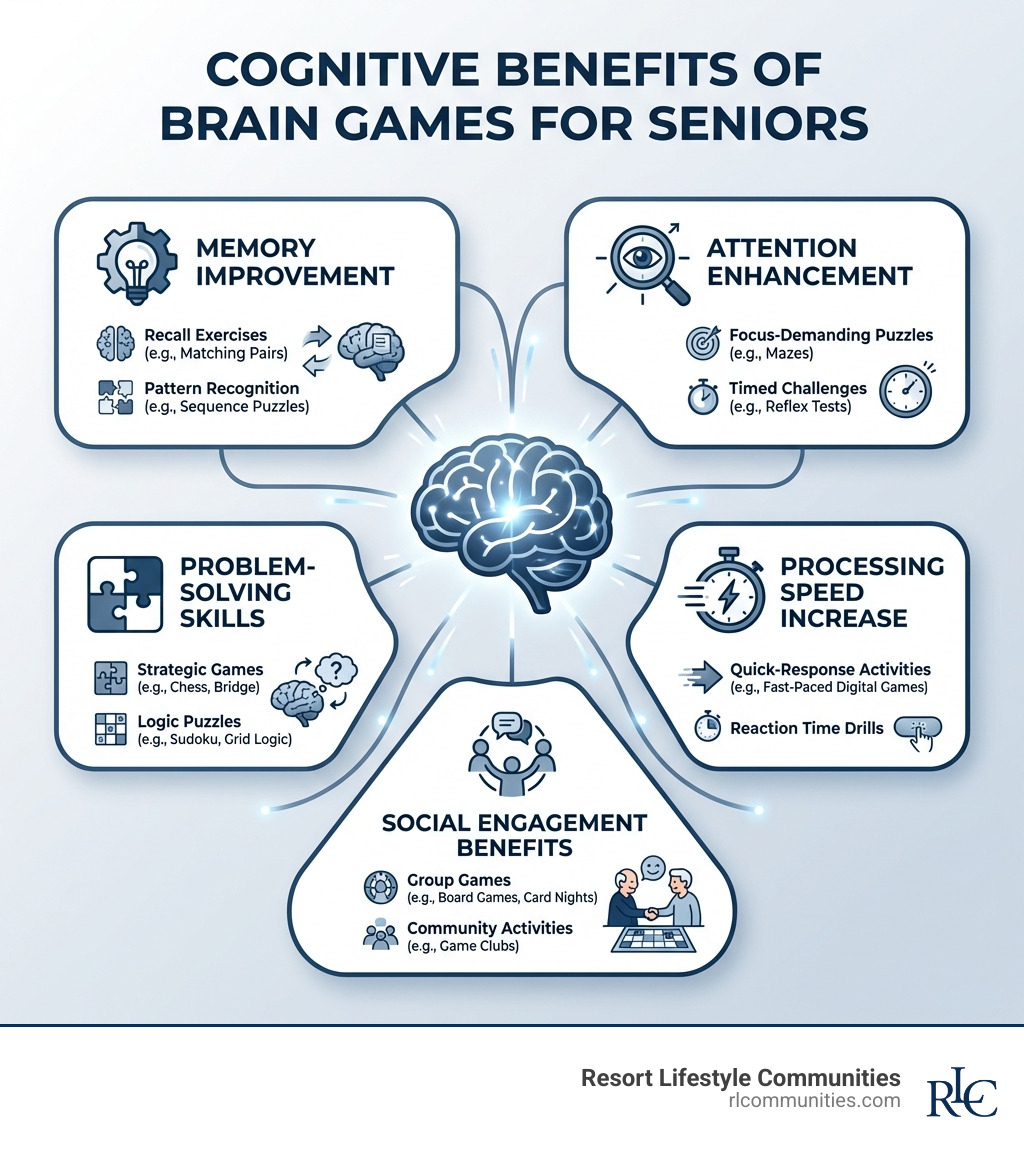
The specific cognitive benefits of playing brain games for seniors are well-documented:
- Memory Improvement: Many games, especially those involving recall or pattern recognition, directly target and strengthen both short-term and long-term memory. A University of Michigan study found that adults who play at least one mentally challenging game every day over several weeks could dramatically improve their memory.
- Attention Span: Games requiring focus and concentration, like Sudoku or word searches, can significantly improve our ability to pay attention and filter out distractions.
- Problem-Solving Skills: Strategic games, logic puzzles, and even crosswords demand analytical thinking and planning, sharpening our problem-solving capabilities.
- Processing Speed: Timed games or those requiring quick decisions can help maintain and even improve how quickly our brains process information.
The scientific evidence supporting these benefits is compelling. Beyond the Mayo Clinic study mentioned in our introduction, other research reinforces the value of mental stimulation. For instance, one study involving nearly 20,000 adults aged 50 to 93 revealed that those who performed number puzzles daily exhibited better cognitive functioning across a range of skills, including attention, episodic memory, executive function, information processing, reasoning, and working memory. Similarly, a study of over 7,000 older adults found that regular card players had better cognitive functioning, particularly in attention, calculation, and language. These findings highlight that mentally stimulating activities, as discussed in scientific evidence for mentally stimulating activities, are indeed a smart move for our brain health.
It's not just scientists who recognize the importance of these activities. AARP’s 2015 Survey on Brain Health showed that a large majority of Americans age 50 and older (92%) believe challenging the mind with games and puzzles is crucial for maintaining or improving brain health. This widespread understanding underscores the value we place on keeping our minds active and engaged.
The Best Brain Games for Seniors to Stay Mentally Sharp
When we talk about brain games for seniors, we're referring to a vast and varied landscape of activities. From the timeless appeal of pen-and-paper puzzles to the interactive world of digital apps, there's truly something for everyone. The goal is to find games that challenge you, keep you engaged, and most importantly, that you enjoy!

One of the great things about brain games is their accessibility. Many can be enjoyed from the comfort of your home, either alone or with friends and family. Furthermore, these games can often be adapted for seniors with different levels of cognitive ability or even physical limitations. For instance, larger print versions of puzzles, voice-activated digital games, or cooperative board games can ensure everyone can participate and reap the benefits.
Classic Pen-and-Paper Puzzles
Sometimes, the simplest tools are the most effective. Classic pen-and-paper puzzles have been staples for generations, and for good reason!
- Crossword Puzzles: These beloved word challenges are fantastic for boosting vocabulary and enhancing memory recall. As you search for the right words to fit the clues, you're actively engaging your brain in retrieving information and making connections. In fact, a recent randomized control trial of older adults with mild cognitive impairment found that crossword puzzles were superior to digital games in improving memory and cognitive functioning over 78 weeks.
- Sudoku: If numbers are more your style, Sudoku is a superb choice for strengthening logic and number skills. This grid-based puzzle requires careful deduction and planning, offering a satisfying mental workout. For those new to the game or looking to refine their technique, there are plenty of resources with Sudoku tips to help you win.
- Word Searches: These puzzles are excellent for improving visual recognition and focus. Scanning the grid for hidden words keeps your eyes and brain working together, enhancing your attention to detail.
- Counting Backwards: Don't underestimate simple counting exercises! Activities like counting backward from 200, subtracting five from each number (e.g., 200, 195, 190), or from 150, subtracting seven, are accessible brain exercises that engage basic arithmetic and sequential memory. You don't have to be a math whiz to enjoy these; just the act of sustained mental calculation provides a healthy challenge.
Strategic Card and Board Games
Bringing people together for a friendly game is not only enjoyable but also incredibly beneficial for our brains. The social interaction combined with mental challenge makes these activities particularly powerful.

- Card Games: From Bridge to Solitaire, card games are excellent for developing strategic thinking and memory retention. Keeping track of cards, planning your moves, and anticipating opponents' actions all give your brain a rigorous workout. The study mentioned earlier, involving 7,308 older adults, found that those who regularly or occasionally played cards had better cognitive functioning—particularly in attention, calculation, and language—than those who never played.
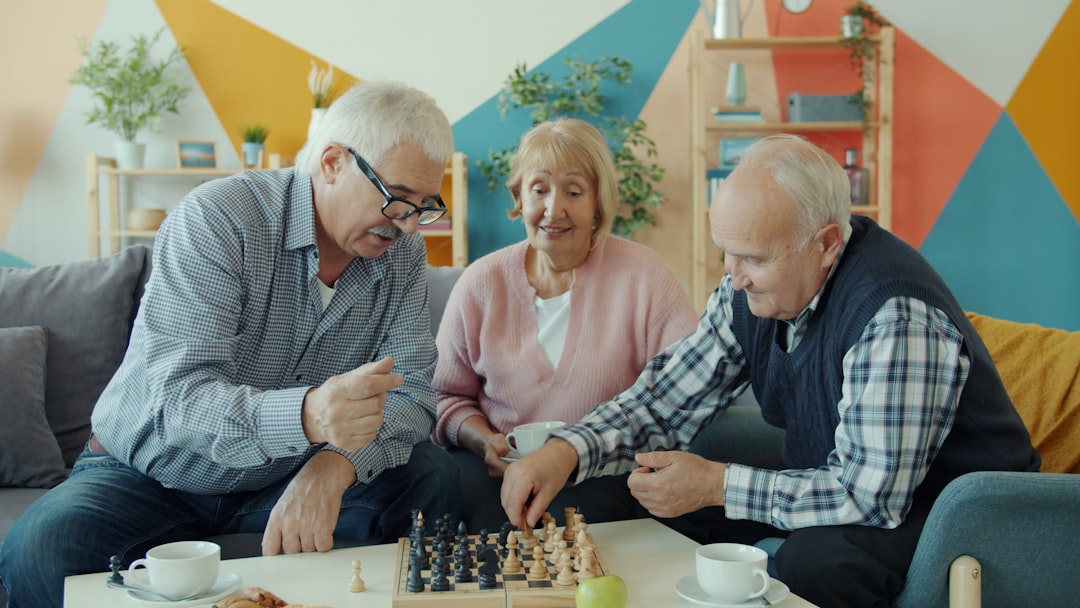
- Board Games: Classics like Chess demand deep critical thinking, planning, and foresight. Each move requires you to consider multiple possibilities and their potential consequences. Scrabble, on the other hand, combines vocabulary, spelling, and strategic placement, making it a fantastic workout for language skills and spatial reasoning. Many board games also foster lively social interaction, which is a crucial component of overall brain health.
Digital Brain Games for Seniors
In our increasingly digital world, a wealth of interactive brain games for seniors are available at our fingertips. These often come in the form of brain-training apps or online platforms, offering personalized and engaging ways to challenge your mind.
Apps like Lumosity, Peak, and BrainHQ are popular choices.
- Lumosity has dozens of games designed to improve memory, attention, and problem-solving skills. As you improve, the games become more difficult, keeping your brain engaged.
- Peak offers exercises targeting different areas of brain function, including problem-solving and focus, acting as a personal trainer for your brain.
- BrainHQ is specifically designed for seniors, loaded with scientifically backed brain exercises.
These platforms often feature a variety of game types that focus on specific cognitive areas:
- Memory Games: These might involve matching pairs, remembering sequences, or recalling figures and numbers. Apps like CogniFit Brain Games offer a range of memory-boosting exercises.
- Pattern Recognition: Identifying patterns in shapes, colors, or sequences helps improve visual processing and logical deduction.
- Speed Games: Timed challenges that require quick thinking and responses can improve processing speed and reaction time.
The beauty of digital games lies in their accessibility on tablets, smartphones, and computers. Many offer varying difficulty levels, allowing you to start comfortably and progress as your skills sharpen. A majority (66%) of Americans age 50 and older even think that playing online games designed for brain health is important for maintaining or improving brain health, showcasing the growing acceptance and belief in their benefits.
Beyond the Games: A Holistic Approach to Brain Health
While brain games for seniors are a fantastic tool, we understand that optimal brain health isn't achieved through games alone. It's part of a larger, holistic approach that integrates various aspects of our daily lives. Think of it as creating a comprehensive "brain health routine" that supports your overall well-being.
Our communities, such as those in Peoria AZ, Chattanooga TN, Colorado Springs CO, and Naples FL, emphasize a lifestyle that supports mental vitality. We believe that a vibrant lifestyle, combining mental stimulation with physical activity, proper nutrition, and strong social connections, is key to thriving in our senior years. You can learn more about our comprehensive wellness programs designed to nurture every aspect of your health.
The Power of Physical Activity and Diet
What's good for your body is often good for your brain!
- Physical Exercise: Regular physical activity is incredibly important for brain health. Scientists believe that physical exercise boosts blood flow to the brain, ensuring that brain cells receive plenty of oxygen-rich blood. This process is crucial for cell health and may help prevent cognitive decline, as explained in how exercise boosts blood flow to the brain. Aiming for 150 minutes of moderate-intensity aerobic exercise, like walking, each week can make a significant difference.
- Diet: A well-balanced diet plays a vital role in supporting cognitive function. We advocate for nutrient-dense foods rich in fruits, vegetables, whole grains, lean proteins, and healthy fats. The MIND diet, a hybrid of the Mediterranean and DASH diets, is specifically designed to promote brain health. Focus on incorporating leafy greens, fatty fish (rich in Omega-3 fatty acids), berries, and nuts into your meals. These foods are packed with antioxidants that protect brain cells from damage.
The Importance of Social Connection and Stress Management
Our brains thrive on connection and calm.
- Social Connection: Humans are social creatures, and maintaining strong social ties is paramount for cognitive wellness. Social engagement stimulates memory, attention span, and language skills, and helps reduce feelings of isolation. Whether it's joining a book club, participating in community events, or simply chatting with friends and family, these interactions are potent brain boosters.
- Stress Management: Chronic stress can have a detrimental impact on our cognitive abilities. Long-term stress affects brain function, so it has a negative impact on your cognitive abilities, as detailed in how stress affects brain function. Incorporating stress-reduction techniques like mindfulness, meditation, deep breathing exercises, or gentle yoga into your daily routine can make a big difference. These practices help calm the mind, improve focus, and protect brain health.
Tips for incorporating brain games for seniors into your daily routine
Making brain games for seniors a regular part of your life doesn't have to be a chore. Here are some simple tips to integrate them seamlessly:
- Choose What You Enjoy: The most effective brain game is one you'll stick with. If you love crosswords, do them! If digital puzzles are more your speed, dive in. Enjoyment is key to consistency.
- Consistency is Key: A few minutes every day is often more beneficial than one long session once a week. Aim for 15-20 minutes of mental stimulation daily.
- Break Routines: Challenge your brain by doing things differently. Try eating with your non-dominant hand, taking a new route on your walk, or arranging your pantry in a new way. These small changes force your brain to create new pathways.
- Learn New Skills: Whether it's a new language, a musical instrument, painting, or even a new cooking technique, learning novel skills is one of the best ways to promote neuroplasticity.
- Adapt for Cognitive Ability: If a game feels too challenging, don't be afraid to simplify it. Use hints, choose easier levels, or play cooperatively. Conversely, if a game feels too easy, seek out more complex versions to keep your brain challenged. The goal is engagement, not frustration!
Frequently Asked Questions about Brain Games for Seniors
We often hear great questions about brain games for seniors and their effectiveness. Let's address some of the most common concerns.
How often should seniors play brain games for maximum benefit?
When it comes to brain games, consistency over intensity is often the most beneficial approach. We recommend aiming for a daily habit, even if it's just for 15-20 minutes. Just like physical exercise, regular mental workouts yield better results. Varying the types of games you play also helps stimulate different cognitive areas. So, one day you might tackle a crossword, the next you could play a digital memory game, and the day after, enjoy a card game with friends. The key is to keep it enjoyable and consistent to maintain engagement.
Can brain games really prevent dementia or Alzheimer's?
This is a crucial question. While brain games for seniors are powerful tools for promoting brain health and enhancing cognitive function, it's important to clarify that they are not a cure for dementia or Alzheimer's disease. However, they play a significant role in building cognitive reserve and may help in delaying cognitive decline. By strengthening neural pathways and improving various cognitive skills, these games can help your brain maintain its capabilities for longer. Combined with a healthy lifestyle (diet, exercise, social engagement), they are a vital component of a comprehensive strategy for supporting overall brain health.
Are digital brain games better than traditional puzzles like crosswords?
There isn't a definitive answer to whether one type of brain game is inherently "better" than another; it largely depends on individual preference and the specific cognitive skills you want to target. Both traditional and digital games offer unique benefits. As we learned from a randomized control trial, crossword puzzles were found to be superior to digital games in improving memory and cognitive functioning over 78 weeks for older adults with mild cognitive impairment. This suggests that for certain cognitive benefits, traditional methods hold their own.
Digital games, on the other hand, often offer personalized difficulty levels, real-time feedback, and a wide variety of game types that can target specific skills like processing speed or pattern recognition. Many people find the interactive nature of digital games highly engaging. The best approach is often to combine both digital and traditional games to get a well-rounded mental workout. The most important factor is finding games you enjoy and that effectively challenge your brain in different ways.
Conclusion
We've explored how brain games for seniors are much more than just entertainment; they are a vital component of a healthy, fulfilling life. From boosting memory and attention to sharpening problem-solving skills and fostering social connections, the benefits are clear. By embracing lifelong learning and maintaining an active lifestyle, we can significantly contribute to our mental wellness.
Whether you prefer the quiet challenge of a crossword, the strategic depth of a card game, or the interactive fun of a digital brain-training app, the goal is to keep your mind engaged and curious. A holistic approach that includes physical activity, nutritious food, and strong social ties amplifies these benefits.
At Resort Lifestyle Communities, we believe in empowering our residents to live their best lives, which includes providing opportunities for mental stimulation, social engagement, and physical well-being. Our communities across the country, from Vestavia Hills AL to Round Rock TX, and from Aurora CO to Marlborough MA, are designed to support a vibrant and active lifestyle.
We encourage you to start on this exciting journey of findy, challenging your mind with new and familiar games. It’s a rewarding path that leads to a sharper mind and a more enriched life. To learn more about how our communities foster active and engaging lifestyles, we invite you to explore our vibrant lifestyle options.