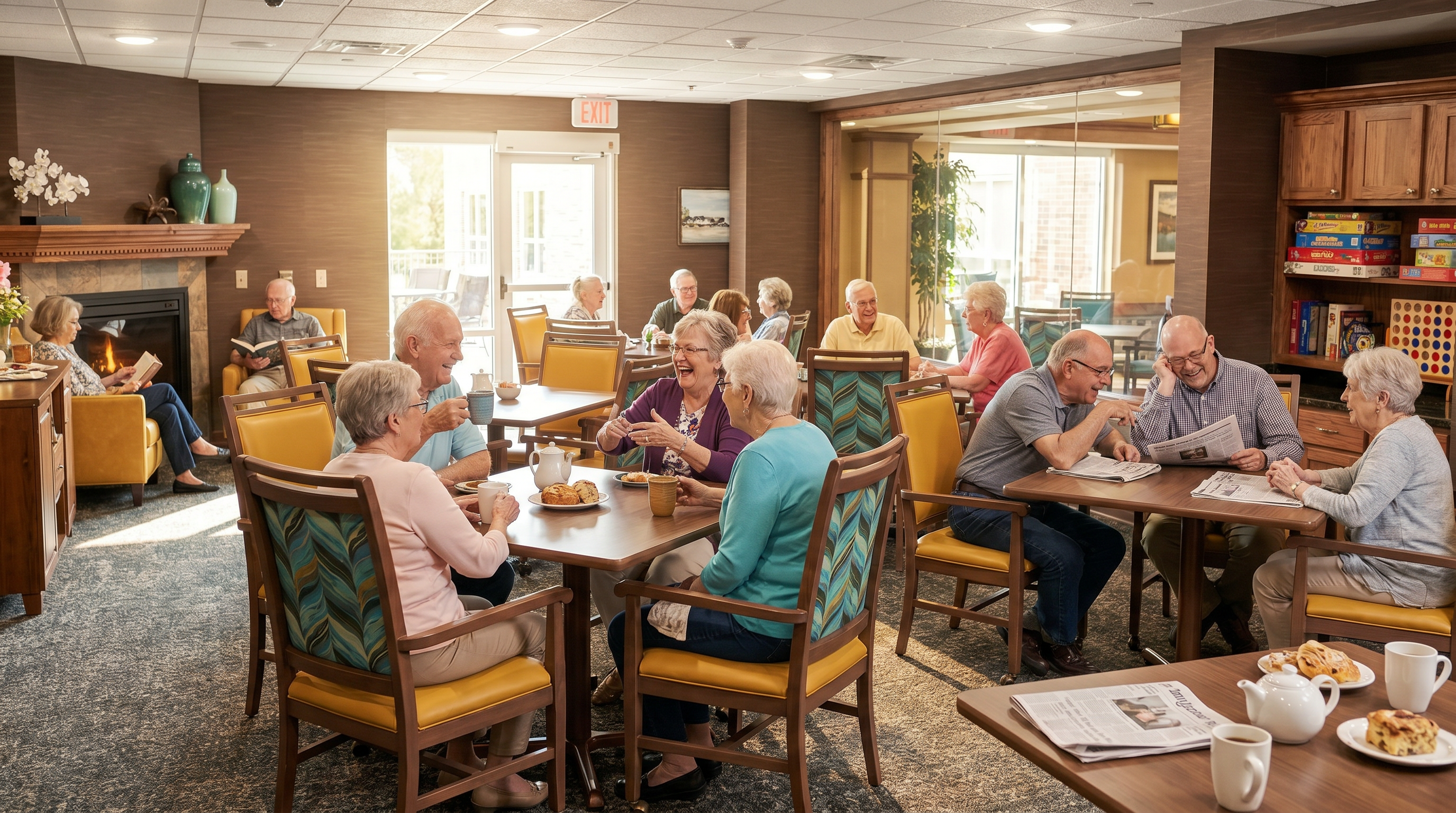
Making friends was easy when life naturally brought people together. School. Work. Neighborhoods. Children's activities. Shared routines created countless opportunities to meet people without much thought. Retirement changes that rhythm. Not because connection becomes less important, but because it often requires a little more intention.
For many people, that realization can feel surprisingly vulnerable. After all, making new friends is not something most of us expect to be thinking about later in life. The good news is that friendship after retirement rarely looks like it did in high school. And that's probably a good thing.
The Fear Is More Common Than You Think
One of the most common concerns people have when considering a new community is simple: "What if everyone already knows each other?" It is an understandable question.
Nobody wants to feel like the new person trying to find a place in an established group. But the reality is that most people who move into a retirement community have asked themselves that same question at some point. They have all experienced being new. They have all walked into a dining room for the first time. Attended a community event without knowing many faces. Wondered how long it might take to feel comfortable.
That shared experience often creates more openness than people expect.
Friendship Looks Different as We Get Older
One of the advantages of adulthood is that friendships become less complicated. There is less pressure to fit in. Less concern about status or social circles. Less need to prove anything.
Most people are simply looking for genuine connection. A conversation that feels easy. Someone who shares a similar interest. A familiar face who notices when you are missing. Friendship often grows through consistency rather than effort. The small moments tend to matter more than the big ones.
Belonging Happens in Ordinary Moments
Many people expect belonging to arrive all at once. More often, it develops gradually. A shared meal. A familiar greeting. A conversation that continues the next day.
The moments themselves may seem small, but they build something meaningful over time. This is one reason community life can feel so different from trying to build friendships elsewhere. Opportunities for connection happen naturally throughout the day rather than requiring constant planning.
An independent living lifestyle creates space for those interactions to occur organically, without forcing anyone into a social schedule.
You Don't Have to Join Everything
There is a misconception that making friends means signing up for every activity on the calendar. In reality, meaningful connections often come from participating in the things that genuinely interest you. Maybe that's a discussion group. Maybe it's a card game. Maybe it's simply sitting with the same group at breakfast each morning.
The goal is not to become the most active person in the community. The goal is to find opportunities that feel natural to you. Many residents discover that friendships develop more easily when they stop trying to make friends and simply start showing up for things they enjoy.
The Anti-Clique Advantage
People sometimes worry that retirement communities will feel like high school all over again. Established groups. Social circles. The feeling that everyone already belongs somewhere.
In reality, most independent living communities are filled with people who have spent decades building careers, raising families, traveling, volunteering, and collecting life experiences. They are generally less interested in exclusivity and more interested in connection.
One of the benefits of a community built around shared experiences is that there are always new residents arriving, new friendships forming, and new opportunities to meet people. The environment itself encourages openness. Not because anyone is required to participate, but because connection naturally becomes part of everyday life.
Shared Experiences Create Stronger Connections
Friendship often grows from doing things together. Attending an event. Trying a new activity. Sharing a meal. Taking part in a conversation that unexpectedly continues long after it was supposed to end. These kinds of experiences are often easier to find in environments where opportunities for engagement are already woven into daily life.
The same social connections that foster a sense of belonging can also contribute to overall well-being, as explored in The Benefits of Retirement Living for Cognitive Health. Connection benefits more than our social lives. It enriches daily life itself.
Give It Time
One of the most important things to remember is that belonging rarely happens overnight. It is not a switch. It is a process. The first conversation becomes a familiar greeting. The familiar greeting becomes a friendship. The friendship becomes part of your routine. Over time, what once felt unfamiliar begins to feel comfortable. And what once felt new begins to feel like home.
This often mirrors the experience many residents describe in Home Away From Home…or Just Home? Rethinking Retirement Living, where comfort develops naturally through everyday life.
Finding Your People
Retirement does not mean leaving connections behind. In many ways, it creates new opportunities to build it. Not through pressure or performance. Not by trying to fit into someone else's group. But by finding people who share your interests, your values, and your desire to enjoy this chapter of life.
For many, that journey begins with simply exploring communities where connection, belonging, and independence are all part of everyday life. Because making friends after retirement is not about starting over. It is about discovering that meaningful connections can happen at any stage of life.