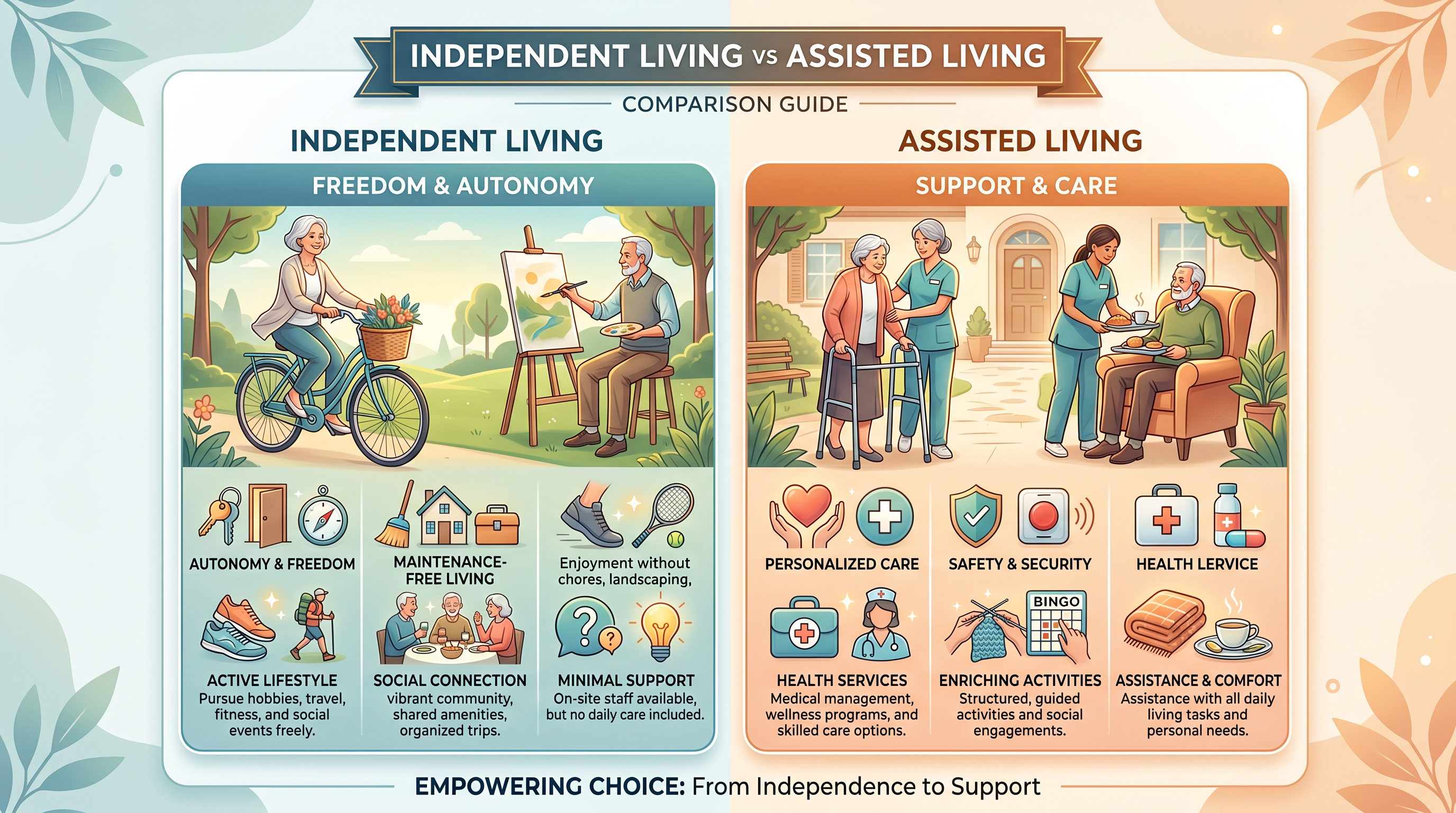
Not every retirement living decision begins in the same place. Some people are looking for more freedom. Others are looking for more support. And many families are simply trying to understand the differences between the options available to them. That can make the conversation feel more complicated than it needs to be.
In reality, independent living and assisted living are designed for different purposes. Neither is “better” than the other. They simply serve different needs at different stages of life. Understanding that distinction can bring a great deal of clarity.
Two Models Built Around Different Priorities
At a glance, independent living and assisted living may appear similar. Both offer community, convenience, and opportunities for connection. But the foundation of each model is very different.
Independent living is designed for older adults who are active, capable, and looking to simplify life while maintaining their independence. Assisted living is designed for individuals who need more consistent support with daily activities, health-related routines, or personal care. Both environments can provide meaningful benefits. The key is understanding which type of support best aligns with the life someone is living today.
The Heart of Independent Living
Independent living is centered around lifestyle. At Resort Lifestyle Communities, the goal is to remove many of the responsibilities that can begin to feel heavy over time while still preserving freedom, flexibility, and personal choice. Meals are thoughtfully prepared. Housekeeping is handled. Transportation and everyday conveniences are already part of daily life. That structure creates more room for connection, hobbies, travel, wellness, and the simple enjoyment of having fewer obligations competing for your attention.
An independent living lifestyle is not built around care or medical oversight. It is built around supporting people who want life to feel easier, more social, and more manageable without giving up their independence.
The Purpose of Assisted Living
Assisted living serves a different role. For individuals who need help with activities such as medication management, bathing, dressing, or more hands-on daily support, assisted living can provide an important level of care and structure.
In many cases, these environments are designed to help residents remain safe and supported while still maintaining as much independence as possible.
That kind of care can bring peace of mind not only to residents, but also to family members navigating changing health needs. It is important to recognize the value of that support when it becomes necessary.

Where the Models Overlap
Although the purpose behind each model differs, there are also areas where they naturally overlap. Both independent living and assisted living often prioritize:
· Community and connection
· Opportunities for engagement
· Reduced isolation
· Comfortable, maintenance-free environments
That overlap is part of why the two can sometimes feel difficult to distinguish at first. A simple way to think about it is this:
Independent Living
· Lifestyle-focused
· Active, self-directed living
· Convenience and freedom
· Social engagement
· Maintenance-free living
Assisted Living
· Support-focused
· Help with daily activities
· Care coordination
· Additional structure
· Personal assistance
Shared Priorities
· Connection
· Comfort