There’s a certain clarity that comes from feeling engaged in your day. Not busy for the sake of it, but connected. Interested. Aware of what’s happening around you and where you fit within it.
For many people, that sense of engagement becomes even more meaningful over time. Not because anything is missing, but because it becomes clearer what truly supports a sense of well-being.
Cognitive health is often talked about in structured ways, but in everyday life, it tends to be shaped by something simpler. How often you’re connecting. How often you’re learning. How often something captures your attention in a meaningful way.
A Natural Approach to Brain Health
When people think about brain health for seniors, it’s easy to imagine routines or exercises that need to be followed. Those things can have their place. But cognitive health is not something separate from how you live each day.
Conversation. Movement. Curiosity. Even small decisions made throughout the day all contribute to how engaged the mind feels. Many of these ideas are closely tied to the value of lifelong learning and staying mentally active in ways that feel natural and enjoyable.
In an environment where those elements are part of daily life, mental stimulation tends to happen naturally rather than by design.
The Role of Social Connection
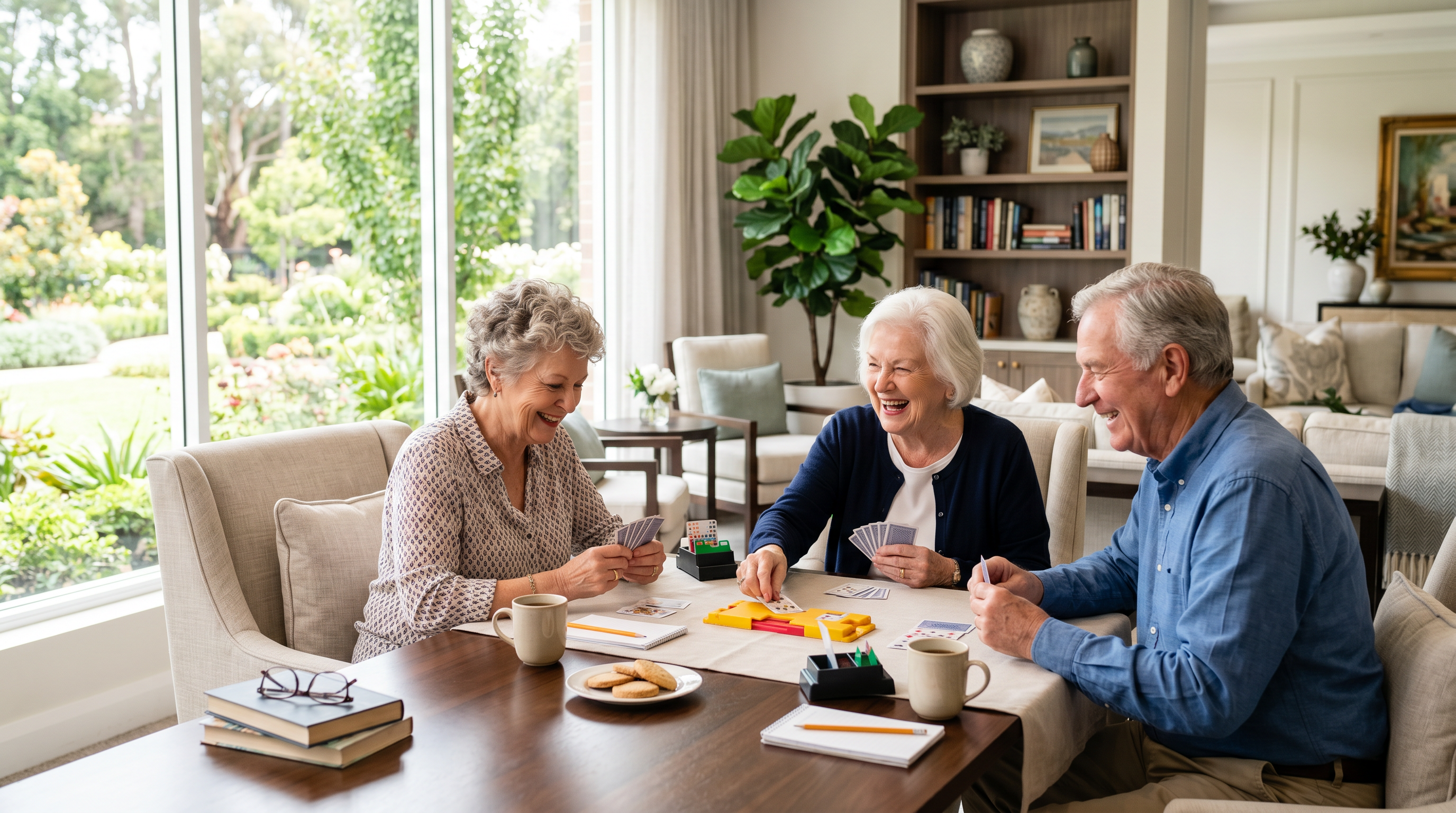
One of the most consistent influences on cognitive health is social connection. A conversation over a meal. A shared experience. A familiar face that becomes part of your routine.
These interactions do more than pass the time. They invite you to listen, reflect, and respond. They keep your mind active in ways that feel natural and engaging. Over time, the connection between relationships and overall well-being becomes more apparent, especially in everyday moments shared with others.
In a setting where connection is part of daily life, those moments happen more easily. They are not something you have to plan. They are already there. This is often where how social living supports cognitive health becomes something you can feel, not just understand.
Activity That Feels Like Participation, Not Obligation
Mental stimulation does not have to feel formal. It can be as simple as trying something new, revisiting something familiar, or stepping into a group activity that catches your interest. Activities that feel enjoyable often create the most meaningful kind of engagement, especially when they reflect your personal interests.
In communities where opportunities are thoughtfully built into daily life, there is always something to step into. Not because you have to, but because it’s there when it feels right.
You can see how our daily services and amenities support that kind of rhythm without requiring you to plan around it.
Small Moments That Add Up
Cognitive health is rarely shaped by one habit. It’s influenced by patterns. The rhythm of your day. The variety within it. The moments that invite you to think, respond, and connect. A conversation in the morning. An activity in the afternoon. A shared experience in the evening.
Individually, these moments may seem small. But over time, they create a sense of continuity that supports both mental and emotional well-being. Many people find that staying active and engaged in everyday ways becomes easier when those opportunities are consistently present.
Being in an environment where these moments occur naturally can make a meaningful difference.
A Setting That Supports Curiosity
Curiosity plays a quiet but important role in cognitive health. It’s what encourages you to try something new, ask a question, or see something from a different perspective.
In a lifestyle where opportunities for learning and exploration are easily accessible, curiosity has room to grow. It might show up in a class, a conversation, or a shared experience that leads to something unexpected. And when curiosity is supported, it helps keep the mind active in a way that feels natural.
Independence and Engagement Go Hand in Hand
There is a strong connection between independence and cognitive well-being. When you are able to make your own choices and decide how your day unfolds, it reinforces a sense of agency. That sense of control plays an important role in how engaged you feel.
In an independent living environment, that balance is carefully maintained. You have the freedom to participate as much or as little as you choose, while still being surrounded by opportunities for connection.
Where Engagement Becomes Everyday Life
For many people, the shift is not dramatic. It is subtle. More opportunities to connect. More moments of engagement. Less effort required to stay involved. Over time, those changes begin to add up. Cognitive health feels less like something to manage and more like something supported by the way you live each day.
For those who are curious about what that kind of environment might look like, it can start with simply exploring communities where connection, activity, and everyday engagement are part of the experience. And in that kind of setting, the mind stays active in a way that feels natural.