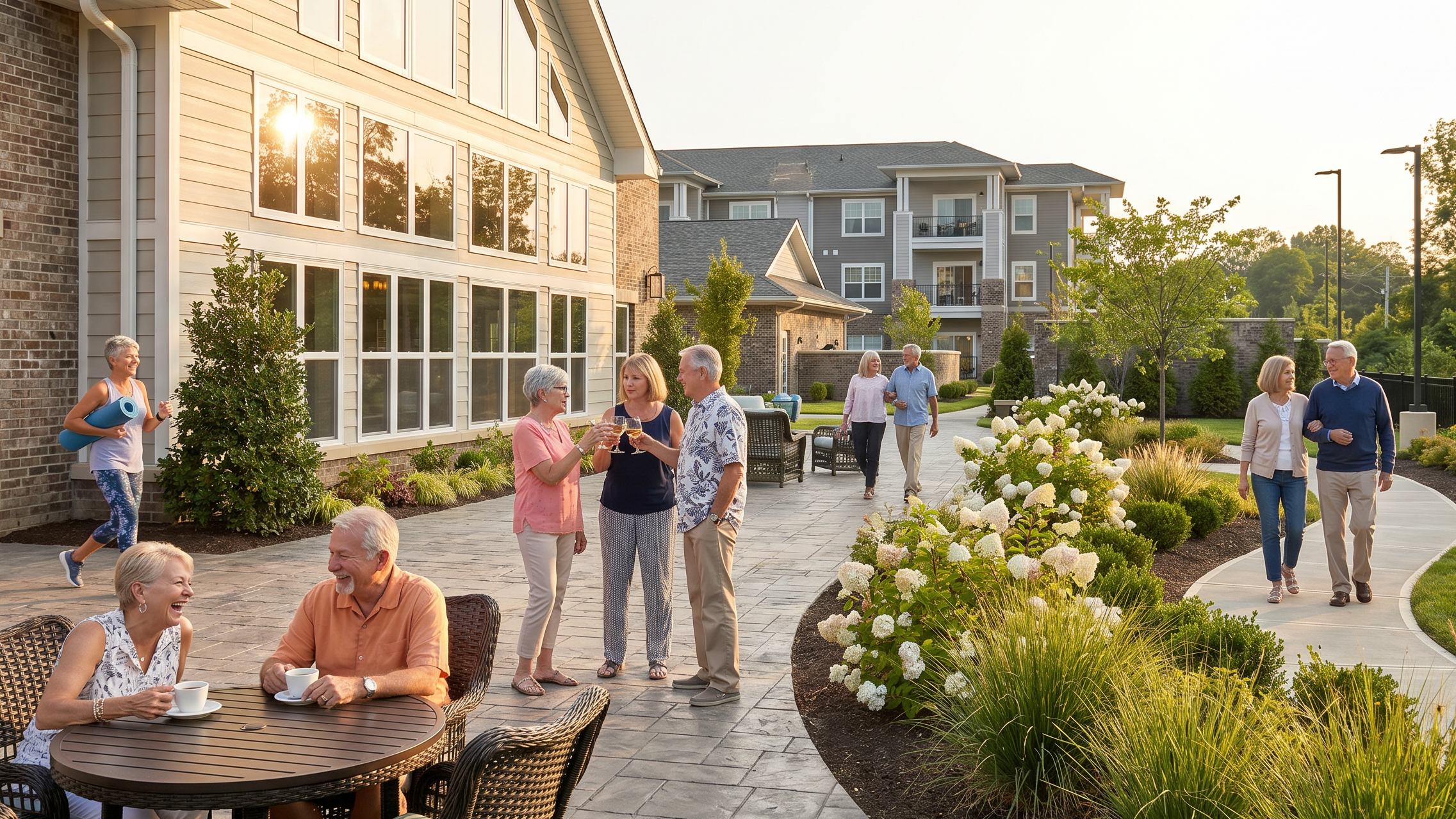
For a long time, retirement living carried a certain image. Many people pictured a stage of life that felt distant — designed for someone older than themselves. For those with family members who retired in community settings, memories of visiting a grandmother or a great-uncle in a nursing home were often the only reference point for imagining what retirement living looked like. To be honest, many people still think of retirement this way. However, today’s retirement landscape looks very different, and it is far removed from that outdated image of nursing homes.
Baby Boomers are now entering retirement in large numbers, and they have a very different set of expectations than previous generations. Gen X, meanwhile, is next in line and already shaping the future of senior living communities. They are active, connected, independent, and accustomed to choice.
This new generation of retirees is asking a different set of questions. There is less focus on “When will I need retirement living?” and more emphasis on “What kind of lifestyle do I want for the next chapter of my life?” That shift in perspective is changing retirement living in meaningful ways.
Retirement no longer means stepping away from life. For many people, it means creating more room for the parts of life they enjoy most: travel, hobbies, family, wellness, and community involvement — personal interests that may have been postponed during busier years. Today’s retirees want flexibility more than anything else; they want fewer obligations, but also more opportunities.
Now it is time to address some of the elephants in the room. Retirement communities have had a complicated history, and with that come lingering misconceptions. One of the most common reactions people have when they first explore retirement communities sounds something like this:
“I’m not ready for this yet.”
“This place is for old people.”
“I don’t want a nursing home.”
In many cases, these reactions stem from an outdated perception of what retirement living looks like. People imagine giving something up — having less freedom, less independence, and less control. However, modern independent living communities are often built around the opposite idea; the goal is not to limit independence, but to support it.
In today’s retirement communities, residents continue to set their own schedules, pursue their own interests, and live life on their own terms. The difference is that many of the responsibilities that once demanded time and attention have been simplified or handled altogether. This creates more opportunities to learn, connect, explore, and participate.
A fitness class, a community event, a new hobby, or a conversation that turns into a friendship — these experiences are easier to access in community settings, where time is spent on living rather than on maintenance and upkeep.
An independent living lifestyle creates an environment where engagement happens organically, without requiring constant planning or coordination. For many residents, staying active feels less like work and more like a natural part of the day.
Another shift among younger retirees is a growing appreciation for connection. After years of busy schedules and dispersed social circles, many people begin to place greater value on community — not because they need activity for its own sake, but because relationships matter more in later years.
Whether it is a familiar face, a shared meal, or the simple feeling of belonging, these experiences can have a profound impact on overall well-being. Connection is not just a social benefit; it is part of what makes life feel rich and meaningful.
Today’s retirement communities are not responding to yesterday’s expectations; they are adapting to a generation that values independence, flexibility, wellness, and personal choice.
At Resort Lifestyle Communities, that evolution is reflected in everyday life. Thoughtfully prepared meals, housekeeping, transportation, and opportunities for connection and engagement are all designed to simplify daily responsibilities without taking away the freedom to choose how each day unfolds.
You can see how our daily services and amenities support that balance between convenience and independence.
The conversation around retirement living is changing because retirement itself is changing. People are living longer, staying active longer, and approaching this stage of life with a different mindset than generations before them. They are not looking to step away from life. They are looking for more freedom to enjoy it.
For many, that realization begins with simply exploring communities that reflect the lifestyle they want moving forward. Because retirement communities are not just for Boomers anymore. They are increasingly for anyone who believes the next chapter should feel every bit as full of possibility as the ones that came before it.