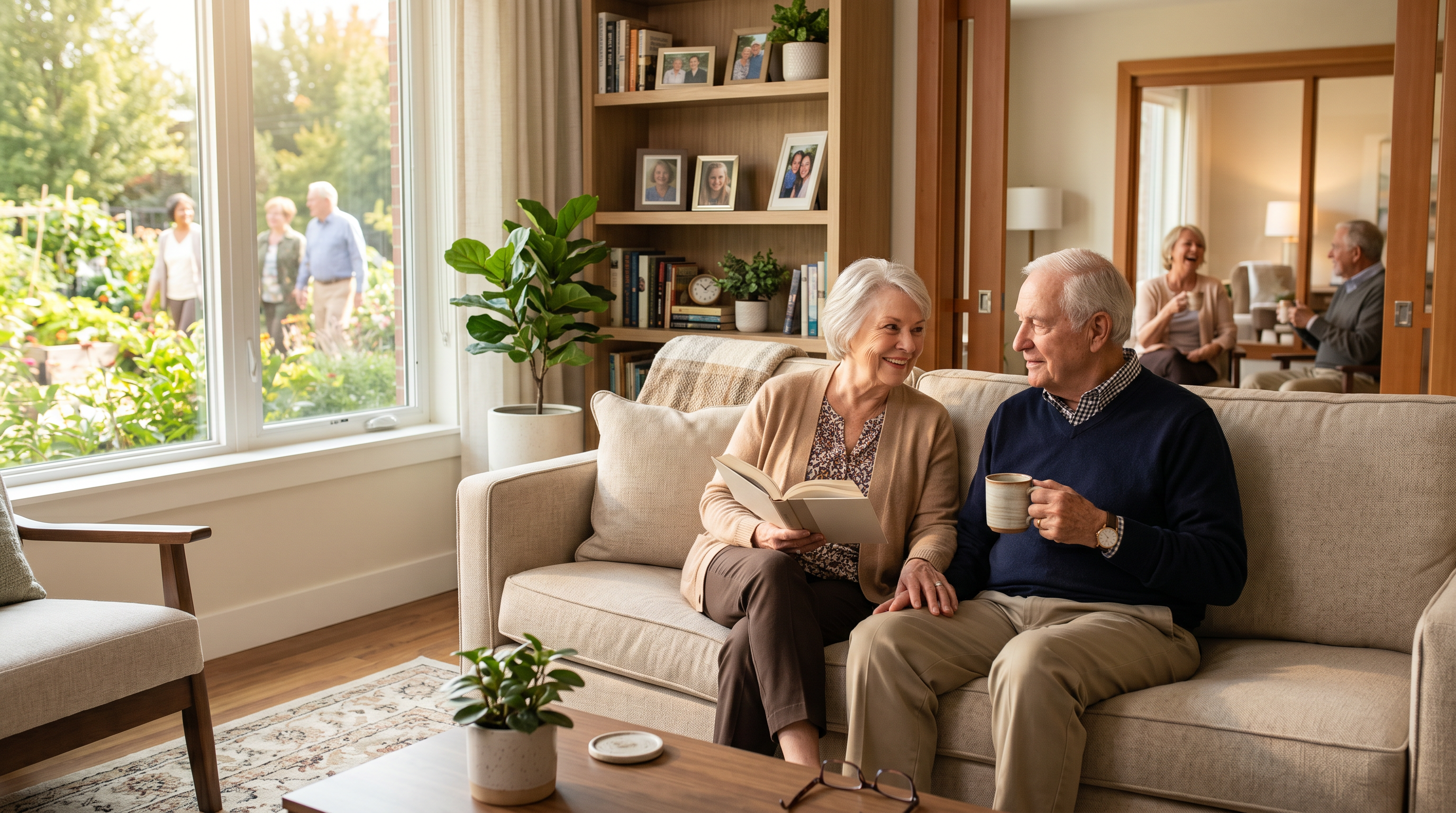
Home is not always defined by how long you have lived somewhere. Sometimes it is defined by how you feel when you wake up there. The comfort of familiar surroundings. The ease of knowing your day can unfold naturally. The sense that life around you feels welcoming, steady, and your own.
For many people, retirement living is first imagined as a “home away from home.” A comfortable next step. A place that offers convenience, connection, and support. But over time, many discover something deeper. It does not feel like a second home at all.
It simply feels like home.
Why the Idea of Home Evolves
Home often carries layers of meaning. It may hold memories, milestones, and years of routine. It can represent independence, identity, and the life you built over time. Because of that, it is natural to wonder whether any new place could ever feel the same.
The truth is, home is not only about history. It is also about how life feels now. It is where you feel comfortable being yourself. Where daily life feels manageable. Where you feel connected to the people and rhythms around you. As priorities shift, many people begin to see that home can evolve too.
More Than a Place to Live
Retirement living is sometimes misunderstood as simply a housing decision. In reality, it is often a lifestyle decision. When meals are thoughtfully prepared, housekeeping is handled, and opportunities for connection are part of everyday life, the feeling of home can begin to expand beyond four walls.
Instead of spending energy on chores, repairs, or logistics, there is more room for the parts of life that feel meaningful. That might be conversation over dinner. Time for personal interests. A walk with a neighbor. A day that feels open rather than obligated. This is often where an independent living lifestyle starts to feel less like a concept and more like everyday life.
Comfort Comes in Different Forms
Many people associate comfort with familiarity, and rightly so. But comfort can also come from simplicity. Knowing your monthly expenses are predictable. Knowing the details of daily life are thoughtfully handled. Knowing support and connection are close at hand if you want them.
That kind of ease often creates a new form of comfort, one rooted not only in memory, but in peace of mind. For some, it feels similar to the relief that comes with rethinking financial peace in retirement living, where fewer moving parts create more room to enjoy life.
The Role of Community in Feeling at Home
A house can be quiet. Home usually has warmth. Often, that warmth comes from people. A familiar greeting in the morning. A shared laugh at lunch. Recognizing faces and feeling recognized in return. Connection has a way of turning spaces into places that matter.
In communities where social life happens naturally, those moments tend to arise without effort. You do not need to coordinate everything yourself. Opportunities for conversation, participation, and belonging are already part of the rhythm of the day. You can see how RLC’s daily services and amenities support that kind of environment, where comfort is shaped as much by experience as by surroundings.
Letting Go of the “Second Best” Mindset
Sometimes people approach retirement living with an unspoken assumption that it means giving something up. Less privacy. Less independence. Less identity. But the right environment often reveals the opposite.
Less maintenance can mean more freedom. Less stress can mean more energy. Less isolation can mean more connection. What changes is not who you are, but how much of your time is freed up to live as yourself. That shift is why many people find retirement living does not feel like a substitute for home. It feels like an updated version of it.
When Home Feels Lighter
There is something meaningful about living in a place that supports your life rather than demanding so much from it. Where your space is your own, but the burdens that once came with it no longer define your days. Where responsibilities are lighter, yet possibilities feel larger.
Many people notice that when the practical parts of life become easier, they feel more present. More interested. More able to enjoy the simple moments that once got crowded out. That kind of lightness often supports the same sense of engagement found in articles about how social living supports cognitive health, where connection and participation become part of everyday well-being.
Just Home
At some point, the phrase “home away from home” may no longer fit. Because once routines settle in, friendships grow, and life begins to feel natural again, the distinction starts to fade. It is no longer about comparing one chapter to another. It is about recognizing that home can continue to evolve with you.
For many, that realization begins with simply exploring communities that are designed around independence, comfort, and everyday ease. And sometimes, what first feels like a new place turns out to be something more familiar than expected. Not a home away from home. Just home.